Why Hair Has Always Been Part of Queer Self-Expression
Hair is never just hair. For most people it's a style choice. For a lot of queer people, it's something closer to a language. A way of signaling identity before you've said a word. A way of finding your people in a crowd. A way of saying, without apology, this is who I am.
Queer hair in San Francisco has a particular history, one that's woven into the city's identity as deeply as the Castro itself. And understanding that history makes the work happening in salons like Headprint Studio feel like what it actually is: a continuation of something that's been going on for a very long time.
Hair as Identity: A Brief History
Long before the modern queer rights movement had language or visibility, hair was one of the few ways people could quietly, and sometimes not so quietly, signal who they were.
In the early and mid 20th century, short hair on women and longer, styled hair on men carried enormous social weight. These weren't just aesthetic choices. They were coded signals within communities that had no safe public language. A certain cut, a certain style, a certain way of presenting could communicate belonging to someone who knew how to read it, while remaining legible as something else entirely to those who didn't.
The 1960s and 70s changed everything. The counterculture movement broke open gender norms around hair in ways that gave queer people more room to experiment publicly. Long hair on men, short crops on women, androgynous styling — these became part of a broader cultural rebellion that the queer community was deeply embedded in.
The Castro and the Birth of a Look
San Francisco's Castro neighborhood became the epicenter of gay culture in the United States in the 1970s, and with it came a very specific aesthetic. The Clone Look, as it came to be known, was characterized by short cropped hair, mustaches, flannel shirts, and Levi's. It was a deliberate reclamation of masculinity on queer men's terms, a pushback against the effeminate stereotypes that had been used to demean gay men for decades.
At the same time, lesbian communities in San Francisco were developing their own visual language. Short hair, practical cuts, a rejection of the femininity that felt like a costume rather than an expression of self. These weren't just fashion choices. They were political ones.
Hair, in the Castro and beyond, became a form of resistance. A way of saying we exist, we have a look, we have a culture, and we're not going anywhere.
The AIDS Crisis and What Came After
The 1980s and 90s brought the AIDS crisis, which devastated San Francisco's queer community. The visual culture of that era shifted. Shaved heads, sometimes a result of illness, became reclaimed as symbols of solidarity. ACT UP and other activist movements brought a more confrontational aesthetic, one that used appearance deliberately as a form of protest.
The 90s also brought a new wave of queer visibility in mainstream culture, and with it a broader range of what queer hair could look like. The dyke aesthetic expanded. Drag culture, always present, became more visible and more varied. Trans visibility was growing, slowly and painfully, and with it came conversations about gender-affirming style that are still very much alive today.
What Queer Hair Looks Like Now
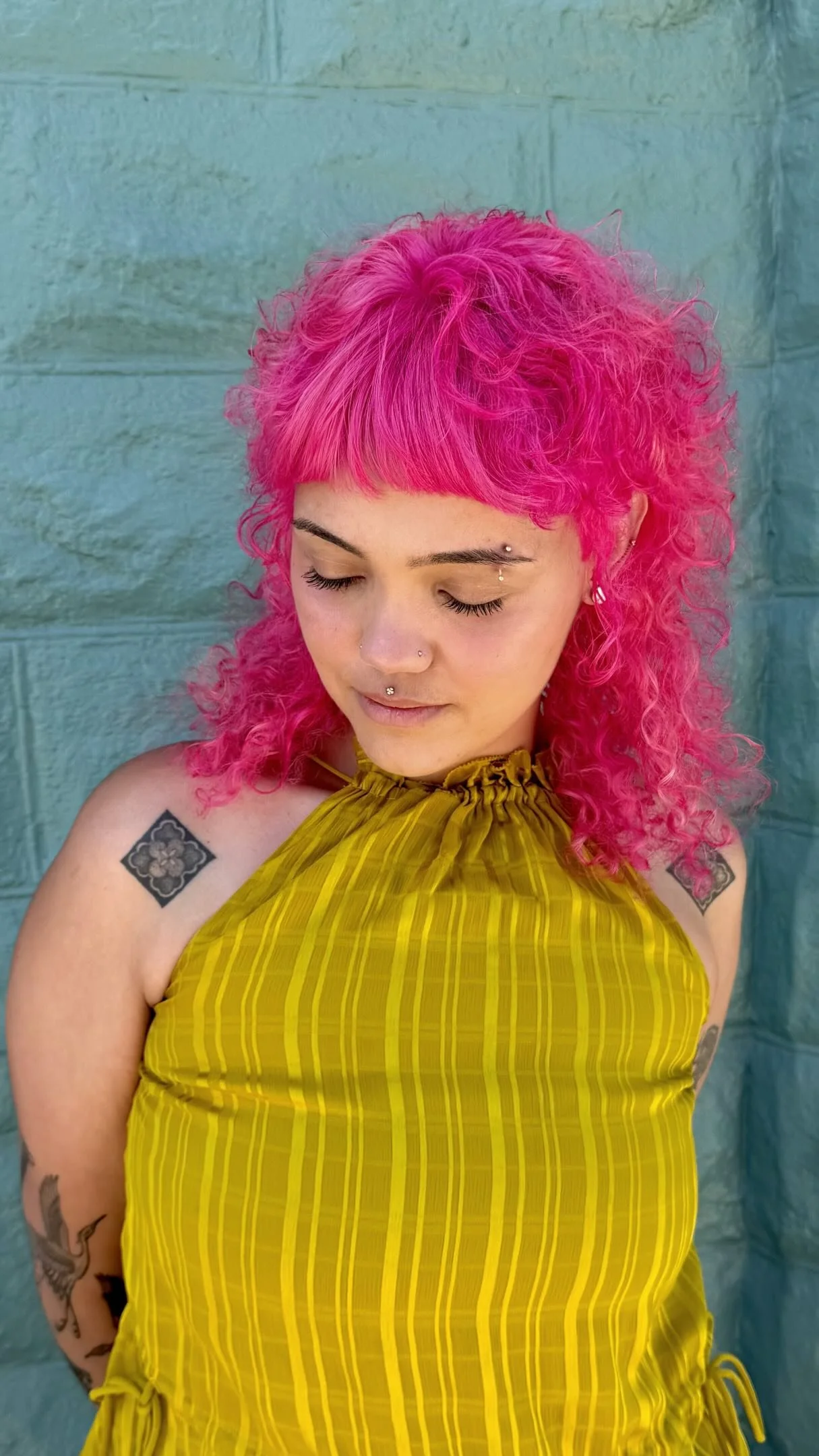
Today, queer hair in San Francisco doesn't have one look. That's the point. It's vivid fantasy color and natural curls and undercuts and mullets and wolf cuts and buzz cuts and long flowing layers and everything in between. It's AC at Headprint specializing in gender-affirming cuts and big transformations. It's Rainey creating space for clients to ask for what they actually need, without having to translate or justify it. It's Jojo doing androgynous and masc cuts for people who've spent years not being seen in a salon chair.
It's also the "Find Your Perfect Stylist" quiz on Headprint's website, which matches clients with a stylist based on their vibe, their goals, and their hair, not their gender. That's a small thing that's actually a big thing.
The range of what queer hair looks like right now is a reflection of how far the conversation has come and how much work is still happening at the level of individual people sitting down in a chair and saying here's who I am, can you work with that?
Why the Salon Chair Matters
There's something specific about the salon chair that makes it different from other spaces. You're there for a while. You're in close physical proximity to another person. You're often looking at yourself in a mirror. You're talking about how you want to look, which is often adjacent to how you want to be seen, which is often adjacent to who you actually are.
For a lot of queer people, that can feel vulnerable. A stylist who doesn't get it, who misgenders you, who talks you out of what you actually want, who prices you based on assumptions about your gender, can make that vulnerability feel like exposure.
A stylist who does get it changes the whole experience. It becomes a collaboration. A place where the vision you've been holding in your head actually gets to exist in the world.
That's what Headprint Studio was built for. Not as a concept, but as a daily practice. Teddy Benjamin founded it in 2019 specifically to create a space that was creative, communal, and unapologetically queer. Two locations in San Francisco. A team whose pronouns are listed right on the website. Stylists who specialize in gender-affirming work because they care about it, not because it's a trend.
Queer Hair in San Francisco, Then and Now
From the Clone Look in the Castro to the wolf cuts and vivid color coming out of Headprint's chairs today, queer hair in San Francisco has always been about more than aesthetics. It's been about visibility. Belonging. The right to take up space and look exactly like yourself while doing it.
That history doesn't disappear. It shows up every time someone sits down in a salon chair and asks for something that feels true. And it shows up in the spaces that are built to say yes.
Ready to Book?
If you've been looking for an LGBT-friendly hair salon in San Francisco where you can actually relax, actually be yourself, and actually get the hair you've been picturing, Headprint Studio is worth a visit.
Come see us at our Cow Hollow location (2848 Webster St, San Francisco, CA 94123) or our Castro location(4327 18th St, San Francisco, CA 94114).
Don't be a stranger and text us!
We foster an inclusive, vibrant space for all hair types and all identities. Learn more about what makes us a truly queer-friendly hair salon in San Francisco.