Bleach and Tone vs Fantasy Color: What's the Difference?
If you've spent any time scrolling hair inspiration, you've probably seen both. Someone with a soft, buttery blonde. Someone else with hair that's straight-up lavender, or bubblegum pink, or a deep, moody blue. And somewhere in the comments, someone always asks the same question: "Wait, is this the same process?"
Sort of. And also, not really.
Bleach and tone and fantasy color actually share a starting point, but they're two very different destinations with two very different levels of commitment. If you're trying to figure out which one you're actually asking for, here's the breakdown.
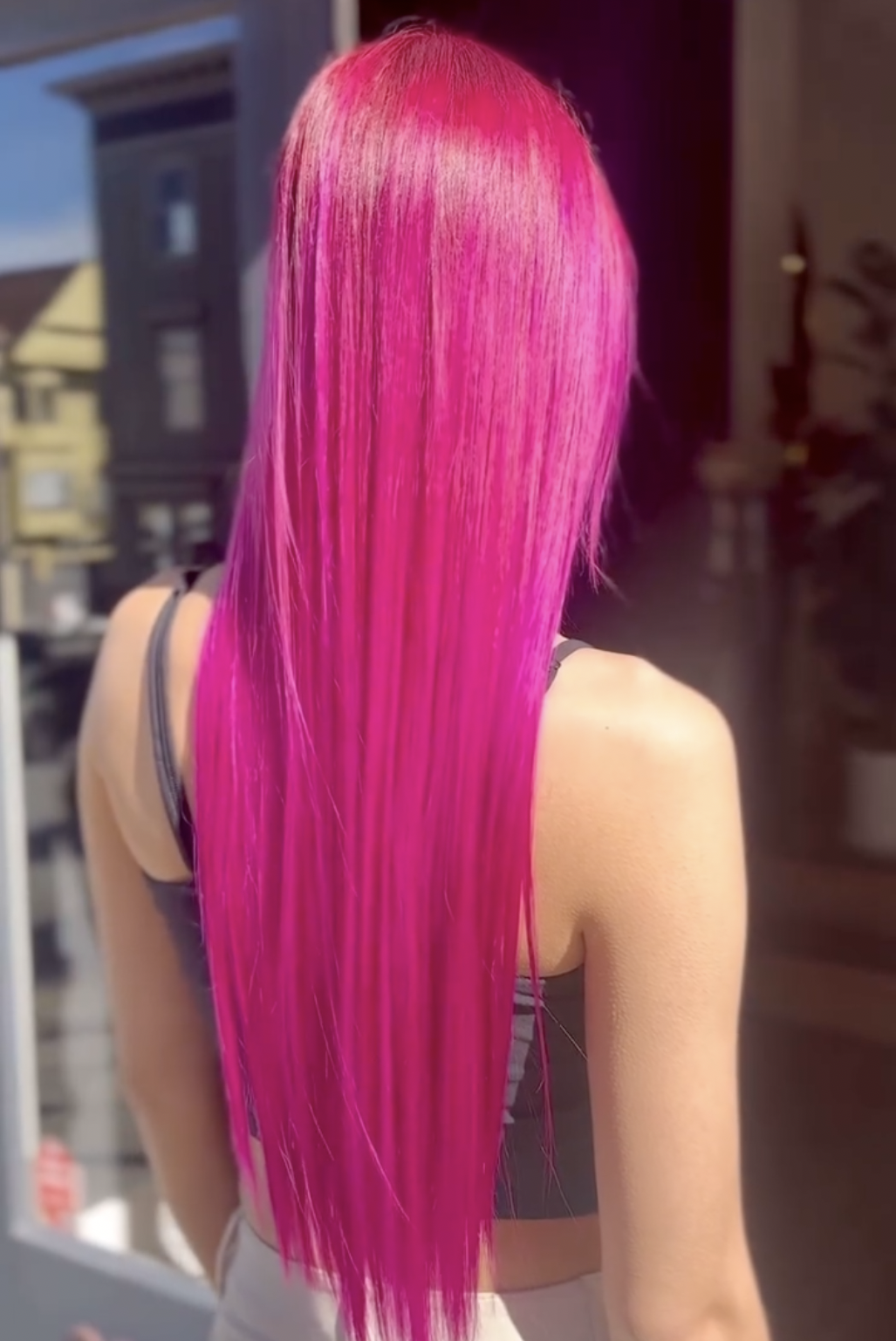
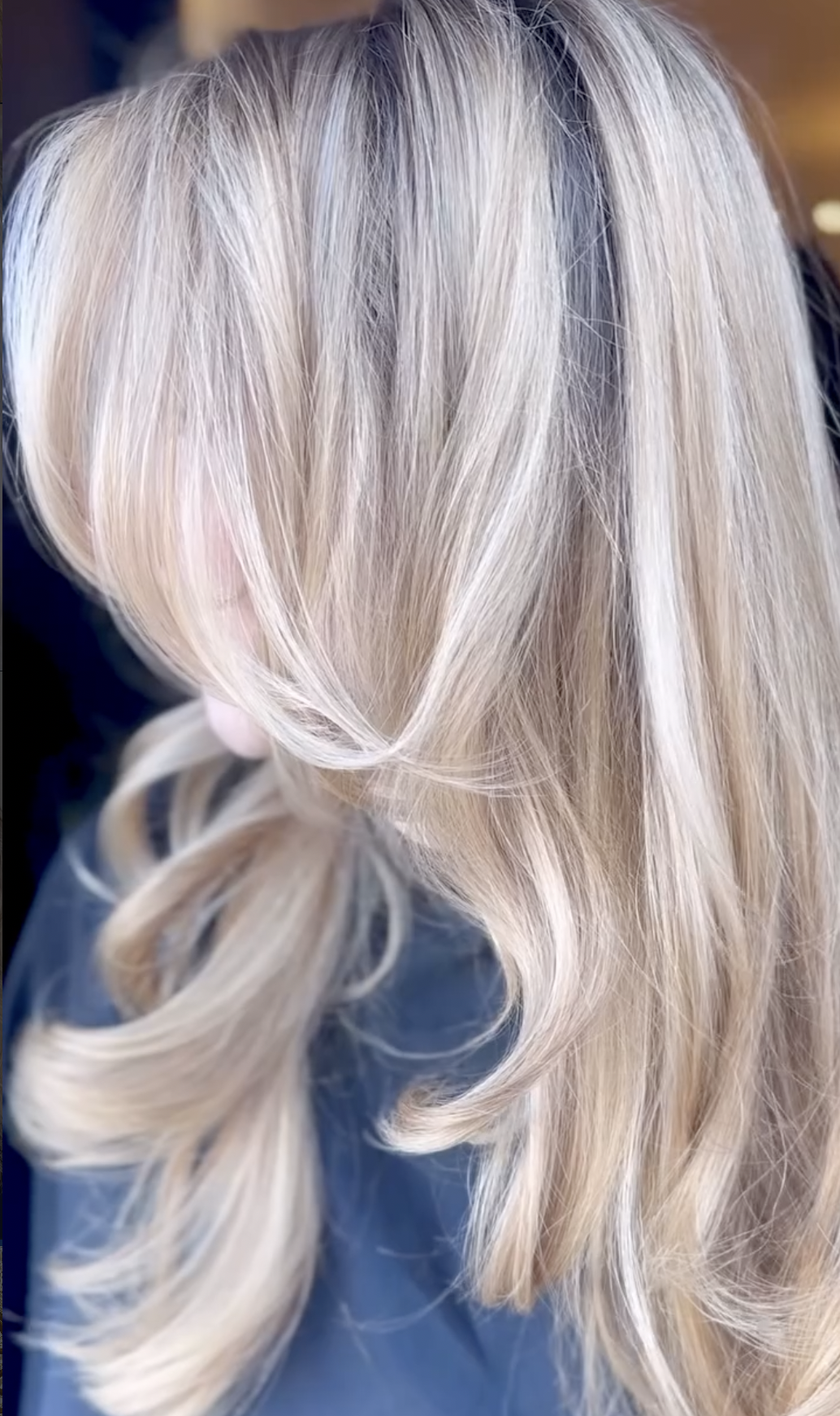
What "Bleach and Tone" Actually Means
Bleach and tone is exactly what it sounds like: two steps. First, your natural color gets lifted using bleach, which strips out pigment and lightens the hair. Then, a toner gets applied on top to correct any brassiness and land on the exact shade you're going for, whether that's a cool platinum, a warm honey blonde, a soft beige, or anything in between.
The bleach does the heavy lifting (pun intended). The toner is what makes it look intentional instead of like hair that just got stripped and left to dry orange. Without toner, freshly bleached hair almost always comes out looking brassy or yellow. Toner is what turns "I bleached my hair" into "I have beautiful blonde hair."
This is the process behind most of the natural-looking blonde you see: balayage, highlights, all-over blonde, ash tones, cool platinum. It's also frequently the first step before a fantasy color, because most fantasy shades need a genuinely light, blank canvas to show up properly.
What "Fantasy Color" Actually Means
Fantasy color is any shade that doesn't occur in nature on human hair. Pink, blue, purple, lavender, mermaid green, sunset orange, anything vivid and non-traditional falls into this category. It's bold, it's expressive, and it's meant to be seen.
Here's the part that surprises people: fantasy color usually requires bleaching too. Vivid, saturated pigments like pink or blue can't show up properly on dark or even medium-toned hair. They need that same light, lifted base that a natural blonde needs, sometimes even lighter, since fantasy pigments read most true and vibrant against pale yellow or white-blonde hair. So in a lot of cases, the first half of getting fantasy color and the first half of getting a natural blonde are actually the same appointment.
The real difference comes after that lift. Instead of a toner designed to look natural and understated, you're applying a vivid, semi-permanent or direct dye designed to be seen from across the room.
So Where Do They Actually Diverge?
Both processes usually start with bleach. Both need a stylist who knows how to lift hair safely without wrecking it. But once you're past that stage, the two paths split hard.
Bleach and tone is about subtlety. The whole goal is for it to look like your hair could have grown this way. Fantasy color is about statement. The whole goal is for it to be unmistakably a choice, not something anyone would confuse for natural.
That difference shows up in more than just the final look. It also shows up in maintenance, cost, and how much of a lifestyle commitment you're actually signing up for.
The Maintenance Difference Is Real
Natural-looking blonde from a bleach and tone service needs regular toning to stay fresh, usually every four to eight weeks, since toner fades and pulls warm over time. It's manageable maintenance, and a lot of people build it into their normal haircare routine without much disruption.
Fantasy color is a bigger commitment. Vivid pigments fade fast, sometimes within two to three weeks, especially with regular washing. Maintaining a true, saturated fantasy color often means color-safe shampoo, cold water washes, UV protection, and accepting that the color will shift and soften between salon visits. Some people love that fading process and lean into it. Others find it frustrating. Either way, it's worth knowing going in that fantasy color is a relationship, not a one-time transformation.
There's also the question of what happens underneath. Since both processes usually start with bleach, your hair's health and texture matter either way. A stylist who's actually trained in lightening will assess how much your hair can safely handle in one sitting, which sometimes means multiple sessions spread out over weeks rather than one dramatic appointment. This isn't a stylist being overly cautious. It's the difference between color that lasts and hair that breaks.
How to Figure Out Which One Is Right for You
If you're not sure which direction you actually want, ask yourself a few honest questions.
Do you want people to compliment your hair, or do you want people to ask "wait, is that your natural color?" Those are two very different goals, and they point toward two different services.
How much upkeep are you actually willing to do? If the idea of touching up color every few weeks sounds exhausting, a lower-maintenance blonde might be the better call. If you're excited about the ritual of it, fantasy color could be a fun ongoing project rather than a chore.
What does your workplace or daily life actually allow for? Some people have total flexibility. Others are working within limits, whether that's a workplace dress code or just personal preference for something more subtle.
And finally: are you looking for a subtle refresh or an identity moment? Both are valid. Neither is more "real" than the other. It's just about knowing what you're actually going for before you sit down in the chair.
Why This Matters at Headprint Studio
Whether you're after the softest, most natural-looking blonde or the boldest fantasy shade you've ever seen, the process starts the same way here: an honest conversation about what your hair can handle and what you're actually hoping to feel when you look in the mirror. As we've talked about in our post on color correction in San Francisco, getting color right (in either direction) starts with a stylist who knows what your hair is actually working with.
Our stylists are trained in both directions: the subtle, natural-looking lift-and-tone work, and the bold, saturated fantasy color that turns heads. No mystery pricing, no guessing games, just an honest read on what's possible and what it'll take to get you there.
The Bottom Line
Bleach and tone and fantasy color aren't opposites, they're related processes with very different end goals. One is about subtlety. The other is about statement. Both usually start with the same first step, and both deserve a stylist who actually knows what they're doing with lightened hair.
So whether you're dreaming of the perfect natural blonde or you've had lavender hair saved to a mood board for six months, the first step is the same: come talk to someone who can tell you what's actually possible.
Book a Consultation at Headprint Studio
If you're thinking about a major change and you're not sure where to start, start here. Our stylists will take the time to actually understand your hair, your goals, and your life before making any decisions. No rushing, no mystery pricing, no surprises.
Come see us at our Cow Hollow location (2848 Webster St, San Francisco, CA 94123) or our Castro location(4327 18th St, San Francisco, CA 94114).
Don't be a stranger and text us!
We foster an inclusive, vibrant space for all hair types and all identities. Learn more about what makes us a truly queer-friendly hair salon in San Francisco.